Product Details:
Country of Origin: USA
Brand :GE
Model 5136-RE-ME
Application field
The SST 5136-RE-VME can be widely used in the following areas:
● Industrial Automation
● Aerospace
● National Defense
● Transportation
● Communication equipment
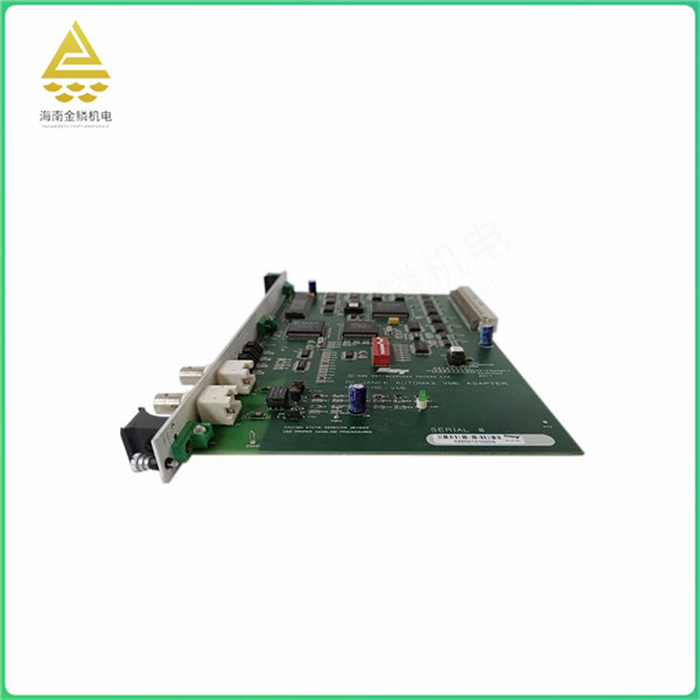
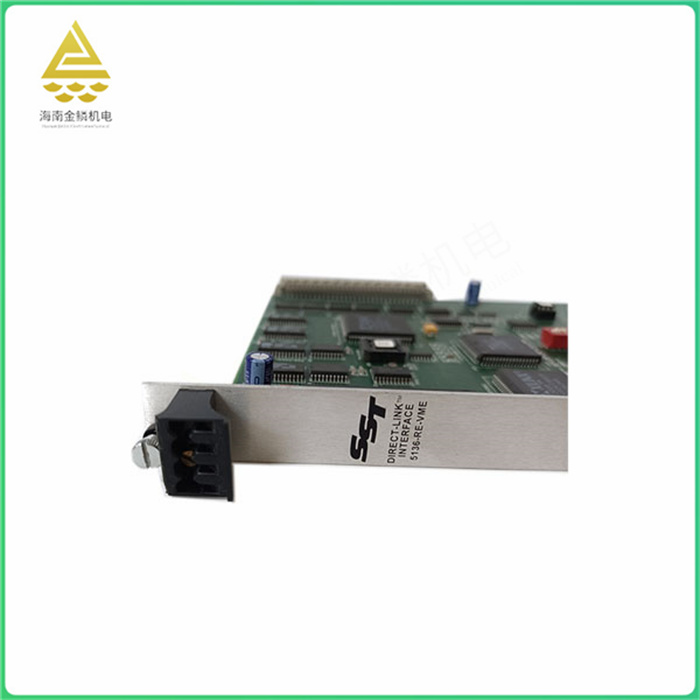
An interface card (also known as a network adapter) is a device that connects a computer to a local area network. Its functions mainly include:
Insert a card into a computer or server expansion slot to exchange data and share resources with the network through network cables.
After installing the network adapter, you often need to configure the protocol, that is, install the driver.
When computers communicate with each other, data is transmitted not in a data stream, but in a frame.
If the frame is regarded as a data packet, the data packet not only contains data information, but also contains data sending, receiving and data verification information.
In addition, there are some interface cards with specific functions, such as Hbas for implementing host interface functions, which can realize the communication between the CPU and peripherals. In addition, there are interface cards for protocols such as USB bus and SATA bus, which are used to connect and manage communication between different devices.
Interface cards usually have the following functions:
Data conversion: Interface cards are able to convert data from one format to another for communication with different devices or systems.
Communication services: Interface cards provide communication services, including sending and receiving data to achieve data transmission and communication.
Data caching: The interface card has the data caching function, which can temporarily store data on the card to reduce the data processing burden of the host.
In addition, some interface cards with specific functions also have other specific functions, such as analog input/output cards can process the input and output of analog signals, digital input/output cards can realize the input and output control of various switching signals, and motion control cards can use servo mechanisms to control the position and speed of the machine. RS-232/RS-485 module is a standard interface card used for serial communication. CAN bus interface card has multi-master protocol, real-time capability, error correction function and strong noise suppression ability.
The function of the interface card is to connect the CPU to peripheral devices and control the external devices of the CPU. It is connected to the CPU through the expansion slot and peripherals through the bus, thus realizing the data transmission and control between the CPU and peripherals. The interface card can be used as the medium of the CPU control peripherals, so that the CPU can directly control the peripherals to work. In the field of industrial automation, interface cards are widely used, which can realize the functions of data acquisition, monitoring, control, processing and analysis, and provide important technical support for improving production efficiency, reducing costs and ensuring production safety.


