Brand: PROSOFT
Model: 532-MBP-MCM4
Product name: Input/Output module
Product width: 53 mm
Product height: 125 mm
Product net depth/length: 260 mm
Net weight: 0.7 kg
The input module can be called the monitoring module, which means that the signal from the external device enters the automatic fire alarm host through the input module for monitoring, such as the input module for monitoring the water flow indicator, and the signal valve also plays a monitoring role.
The output module can be called the control module, which refers to the module that controls the external equipment of the automatic fire alarm system, such as the solenoid valve connected to the output module, and gives the solenoid valve voltage to make it operate when the output module is operating.
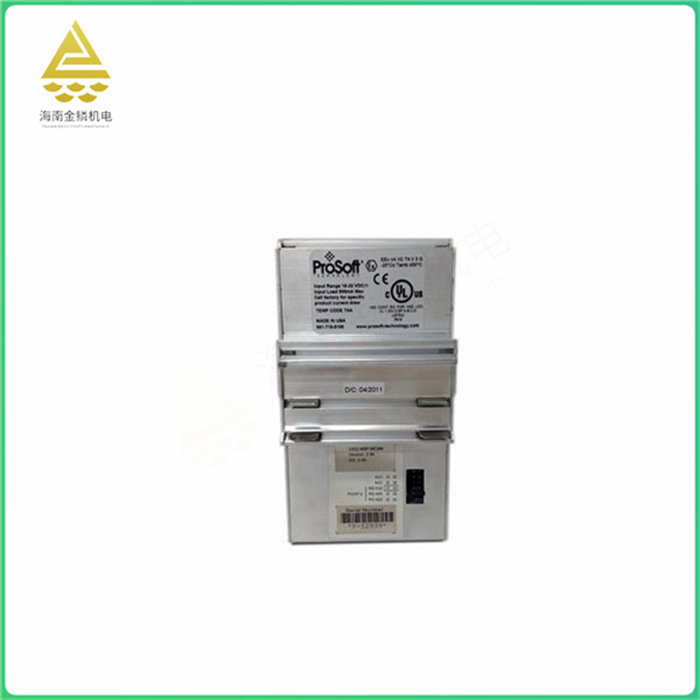
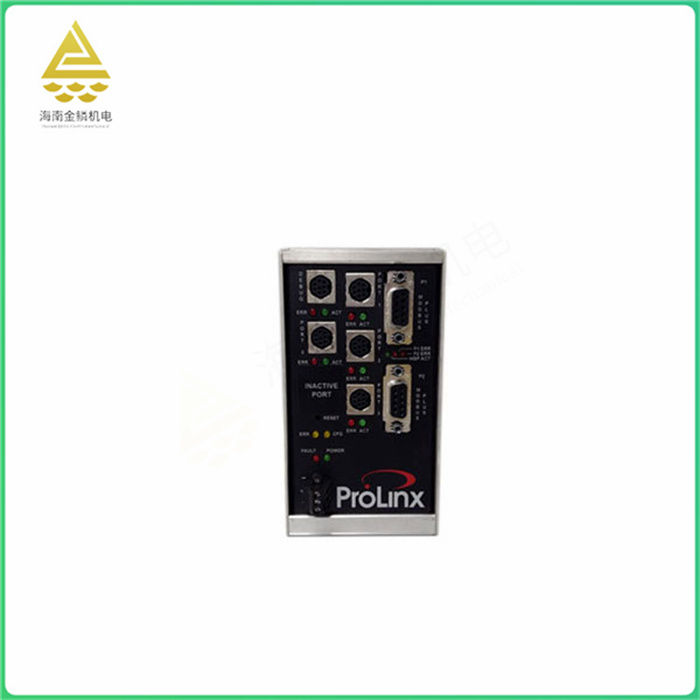
In addition, the input/output module can also provide a pair of passive normally open/normally closed contacts to control the controlled device, and some manufacturers' modules can be set to active output through parameter setting (such as Gulf GST-LD-8301). Corresponding to the dual input/output module, multi-input/output module and so on.
Features and specifications:
1. Communication interface: PROSOFT 532-MBP-MCM4 usually has a variety of communication interfaces, including the Modbus protocol, in order to communicate with other Modbus-compatible devices.
2. Input/output type: It usually has multiple digital input and output channels, which can receive digital signals and control external devices. The input channel is used to collect digital signals, while the output channel is used
Trace is used to control an external actuator or device.
3. Extensibility: Some models of modules support expansion, and more input and output channels can be added to meet the needs of different applications.
4. Operating temperature range: These modules are usually designed to operate in industrial environments and therefore have a wide operating temperature range to adapt to various temperature conditions.
5. Durability: PROSOFT 5302-MBP_MCM4 generally has industry grade I durability and can withstand environmental effects such as vibration, humidity and electromagnetic interference.
6. Configuration and programming: Configuring and programming These modules usually require specific tools or software to tailor configuration and control logic programming to the needs of the application.
Application field:
The PROSOFT 5302-MBP-MCM4 input/output module is commonly used in some of the following applications:
1. Industrial automation: Data acquisition, monitoring and control of equipment and systems in industrial processes, such as production lines, robotic systems and manufacturing processes.
2. Building automation: used to control and monitor the equipment in the building, such as air conditioning, lighting, security systems, etc.
3. Energy management: In the energy management system, to monitor and control the distribution of electricity, energy use and equipment operation.
Input/output module (I/O module) is widely used in the field of industrial automation, which can realize data transmission and signal control between devices. The input module is used to receive and convert the signal from the device, and the output module is used to send the control signal to the device.
The role of the input module is to receive the signal from the device and convert it into a digital signal that the computer can process. Common input modules include digital input module and analog input module. Digital input module is used to receive switching signals, such as relay, contactor and other equipment status signals; The analog input module is used to receive continuous physical signals, such as temperature, pressure, flow, etc.
The function of the output module is to convert the control signal of the computer into a digital or analog signal that can be accepted by the device. Common output modules include digital output module and analog output module. Digital output module is used to control switching signal, such as relay, contactor and other equipment action signal; Analog output module is used to control continuous physical quantity signals, such as voltage, current, etc.
Input/output modules have various types and specifications, which can be selected according to different application scenarios and device requirements. For example, some input/output modules have isolation features that protect the computer from interference from devices; Some modules have a fault diagnosis function, which can easily detect and eliminate faults.
In short, the input and output module is an indispensable part of the industrial automation system, which can realize data acquisition and control, promote collaborative work and data sharing between equipment, and provide important technical support for improving production efficiency, reducing costs, and ensuring production safety.
Input/output module (I/O module) is widely used in the field of industrial automation, which can realize data transmission and signal control between devices. The following are some specific application scenarios of input and output modules:
Equipment control: Input/output modules can be used to control various equipment, such as motors, pumps, valves, etc. Through the digital output module, you can control the start and stop of the equipment, direction, etc. Through the analog output module, the speed, temperature and pressure of the equipment can be controlled.
Data acquisition: Input/output modules can be used to collect various data, such as temperature, pressure, flow, position, etc. Through the digital input module, the status of the switching signal can be collected. Through the analog input module, continuous physical quantity signals can be collected.
Signal isolation: The input/output module has an isolation function to protect the computer from interference from the device. In some application scenarios, the signal of the device may interfere with the computer, and the input and output modules can be used to isolate the signal of the device from the computer, so as to avoid interference.
Fault diagnosis: Some input and output modules have fault diagnosis functions, which can easily detect and eliminate faults. For example, when the equipment fails, the input and output module can transmit the fault information to the computer in time, which is convenient for the staff to troubleshoot and deal with the fault.
Network communication: Input/output modules can communicate with other devices over the network. For example, the input and output modules can be connected to the PLC (programmable logic controller) through the network to achieve data transmission and control.
In short, the input and output module has a wide range of applications in the field of industrial automation, which can achieve data acquisition and control, signal isolation, fault diagnosis and other functions, and provide important technical support for improving production efficiency, reducing costs, and ensuring production safety.


