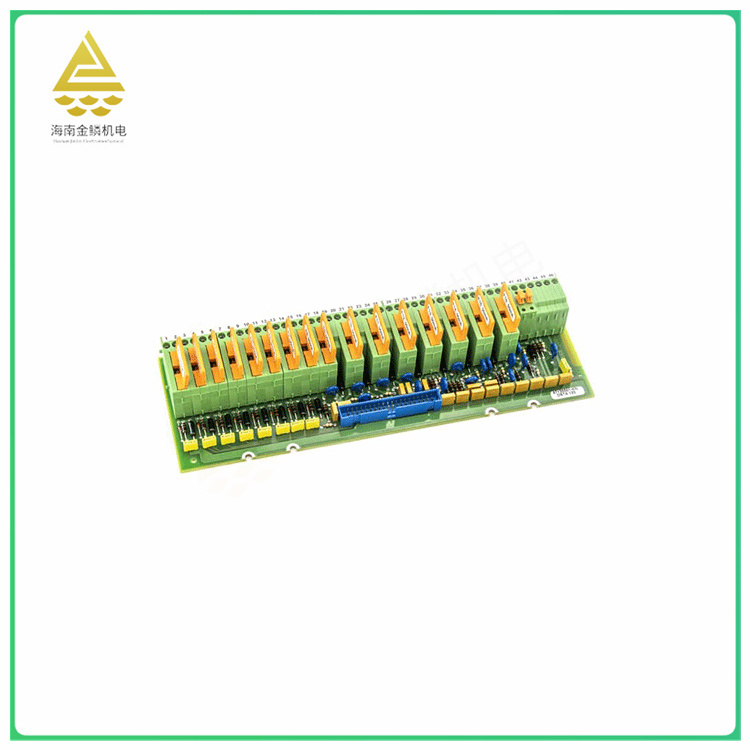
The functions and application areas of DSTA133 mainly depend on the control system and equipment to which it belongs. According to the information I understand, DSTA133 may be a module or device for industrial automation control, with a variety of functions and application areas.
In terms of functions, DSTA133 may include analog input/output, digital input/output, communication interface and other functions for the acquisition, processing, transmission and control of various signals in industrial automation control systems. In addition, the DSTA133 may also have advanced features such as self-diagnosis, remote communication, programming and configuration to improve the reliability and flexibility of the control system.
In terms of application fields, DSTA133 may be widely used in various industrial automation control systems, such as power plant DCS monitoring system, intelligent flat tempering furnace system manufacturing, PLC programmable transmission control system, DCS distributed control system, intelligent fire water supply control system, chemical plant liquid constant flow computer control system. In addition, DSTA133 may also be applied to the production line automation control system in the paper, printing and dyeing, machinery, electronics and other industries.
As a specific controller or module, the advantages and disadvantages of DSTA133 will vary depending on the specific application scenario and comparison object. The following are the possible advantages and disadvantages of DSTA133 based on the characteristics of general industrial automation control modules:
Advantages:
Modular design: DSTA133 may adopt a modular design to facilitate users to flexibly configure and expand functional modules according to actual needs, and improve the customization and maintainability of the system.
High reliability: As a key component in industrial automation control systems, the DSTA133 is potentially highly reliable and can operate stably for a long time in harsh industrial environments, ensuring continuity and safety of the production line.
Powerful communication capability: DSTA133 may support a variety of communication protocols and interfaces, such as Ethernet, RS485, etc., and can achieve seamless connection and data exchange with other devices and systems, improving the integration and intelligence of the entire control system.
Easy to program and configure: DSTA133 may provide a friendly programming and configuration interface, which is convenient for users to modify and optimize the control logic through simple operations, reducing the cost of system development and maintenance.
Cons:
High cost: As a high-end industrial automation control module, the cost of DSTA133 may be relatively high, and there may be certain economic pressure for some users with limited budgets.
High technical barriers: Since DSTA133 may involve complex control logic and programming techniques, there may be high learning costs and technical barriers for users without relevant experience.
Dependence on a specific ecosystem: DSTA133 may depend on a specific ecosystem or software platform, which may be costly if the user wishes to switch to another system or platform.
Limited by application scenarios: The functions and application areas of DSTA133 may be limited and not applicable to all types of industrial automation control systems, which need to be selected according to specific needs.