Brand :MOTOROLA
P/ n: MVME162-213
Directory Description: Embedded controller
Country of Origin: USA
An embedded controller is a control system that is primarily used to perform specified independent control functions and has the ability to process data in a complex manner. It is an electronic device or device controlled by an embedded microelectronic technology chip (including a series of microelectronic devices such as microprocessor chip, timer, sequence generator or controller), which can complete various automatic processing tasks such as monitoring and control.
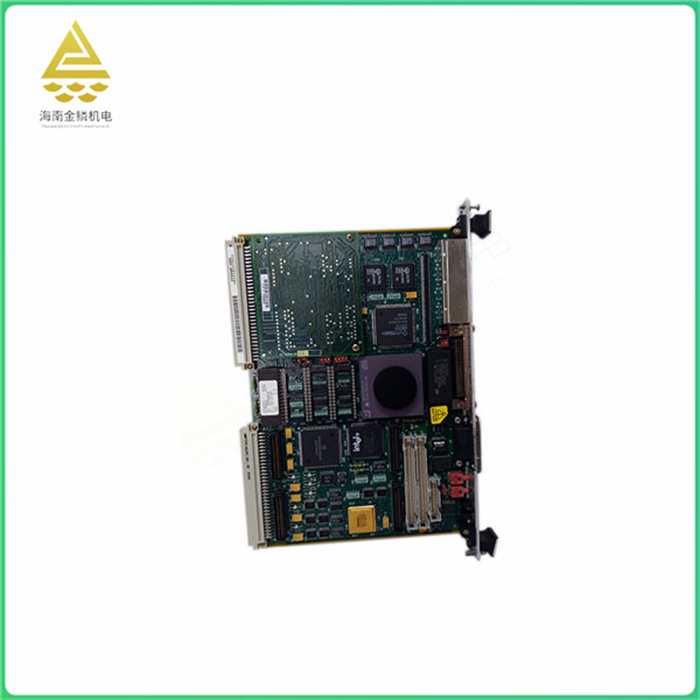
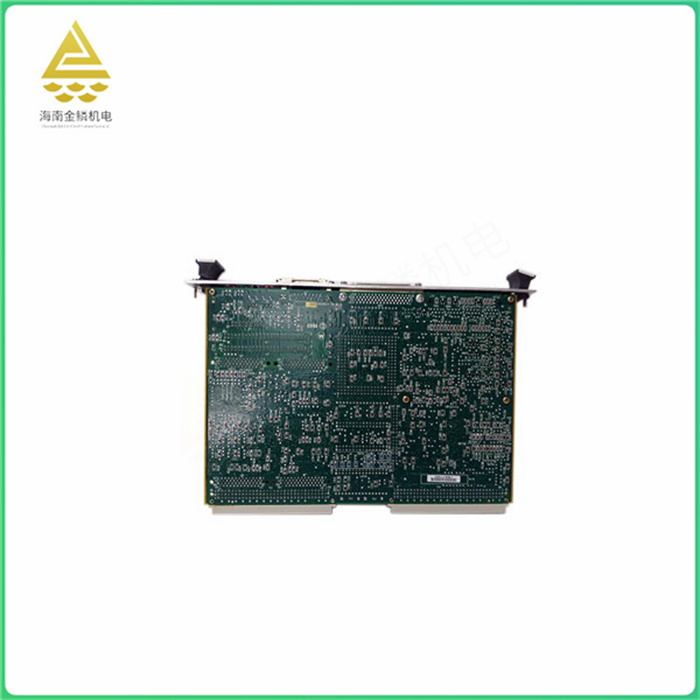
Embedded controllers are mainly used to control, monitor, manage or assist other devices in real time. It has a variety of communication protocol support and a variety of interfaces, can communicate with different devices, to achieve data collection, control and monitoring. At the same time, it also supports a variety of programming languages and development tools, which is convenient for users to conduct secondary development and customization.
Embedded controllers are widely used in various fields, such as industrial automation, smart home, medical equipment, aerospace and so on. It can be used as a primary controller or an auxiliary controller, and can be used in conjunction with other devices or systems to achieve a variety of complex control tasks. At the same time, because of its small size, low power consumption, high reliability, embedded controller has become an important part of modern electronic equipment.
Embedded controllers typically have the following characteristics:
Compact size: Embedded controllers are usually designed to be compact, with a small size and weight for easy installation and use.
Low power consumption: The embedded controller focuses on energy saving and low power consumption design, which can meet the needs of long working hours while ensuring low energy consumption.
Real-time: The embedded controller has the ability to respond in real time, and can quickly process the input signal and output the control signal in a short time to achieve real-time control.
Multiple communication protocol support: The embedded controller supports a variety of communication protocols and interfaces, such as serial port, CAN, Ethernet, etc., to facilitate data transmission and communication with different devices.
Programmability and flexibility: Embedded controllers usually support a variety of programming languages and development tools, and users can develop and customize programs according to their needs to achieve different control functions.
High reliability and stability: The embedded controller adopts advanced technology and stable hardware platform, with high reliability and stability, suitable for a variety of complex and harsh working environments.
Easy integration: Embedded controllers usually adopt system-on-chip (SoC) design, which integrates the processor core, memory, peripherals, etc., on a chip to facilitate system integration and layout design.
In short, the embedded controller has the characteristics of small size, low power consumption, real-time, multiple communication protocol support, programmability and flexibility, high reliability and stability, and easy integration, which is suitable for various fields, such as industrial automation, smart home, medical equipment, aerospace and so on.
Embedded controllers have the following advantages:
High stability: Embedded industrial computer has stable and reliable hardware design and anti-interference ability, and can run stably in industrial environment for a long time.
Strong real-time: embedded industrial computer adopts real-time operating system (RTOS) or real-time extended operating system, which can ensure the real-time and deterministic task.
Strong flexibility: embedded industrial computer supports a variety of hardware interfaces and communication protocols, and can easily connect and communicate with various devices.
Compact size: The embedded industrial computer is compact in size, simple to install and maintain, flexible, and can adapt to a variety of compact space layouts.
Low power consumption: Embedded industrial computer adopts low power consumption design, which can reduce energy consumption and heat generation, and extend the service life and stability of the equipment.
High cost performance: The design of embedded industrial computer pays attention to cost performance, which can achieve lower costs while meeting functional requirements.
Customizable: Embedded industrial computer supports a variety of programming languages and development tools, and users can develop and customize programs according to their needs to achieve different control functions.
In short, the embedded controller has the advantages of high stability, strong real-time, strong flexibility, small size, low power consumption, high cost performance and customization, and is suitable for various industrial automation, smart home, medical equipment, aerospace and other fields.
Embedded controllers are widely used in various fields, such as industrial automation, smart home, medical equipment, aerospace and so on. The following are some typical application scenarios for embedded controllers:
Industrial automation: Embedded controllers can be used in various industrial automation equipment, such as robots, CNC machine tools, production lines, etc. They need to complete real-time control, data acquisition and processing, equipment monitoring and other functions.
Smart home: Embedded controllers can be used in smart home systems, such as smart door locks, smart lighting, smart air conditioning, etc. They need to complete equipment control, data acquisition and processing, home monitoring and other functions.
Medical equipment: Embedded controllers can be used in medical equipment, such as medical imaging equipment, diagnostic instruments, etc. They need to complete the data acquisition, processing and display functions, while ensuring the reliability and stability of the equipment.
Aerospace: Embedded controllers can be used in the aerospace field, such as avionics, satellite control systems, etc. They need to complete real-time control, data acquisition and processing, equipment monitoring and other functions, and need to meet the requirements of high reliability and high stability.
In short, embedded controller has a wide range of application scenarios, can achieve automatic control and data processing functions in various fields.


