The MVME5500 is a digital signal processing module that is commonly used in digital signal processing (DSP) applications such as digital signal controllers, digital communication systems, and digital image processing.
Motorola MVME5500 is an embedded computing platform, not a digital quantity control module, but a computer hardware for embedded computing and control. Typically, it is used in industrial automation, control systems, data acquisition, and embedded applications.
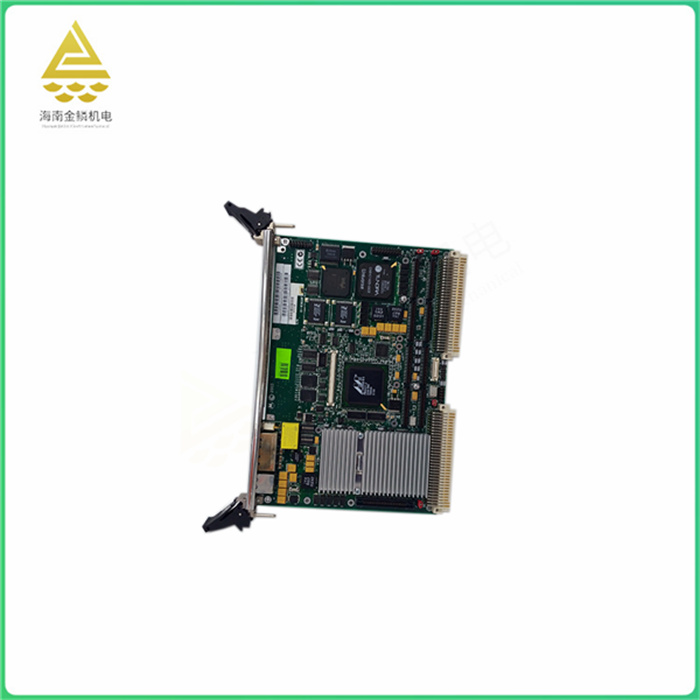
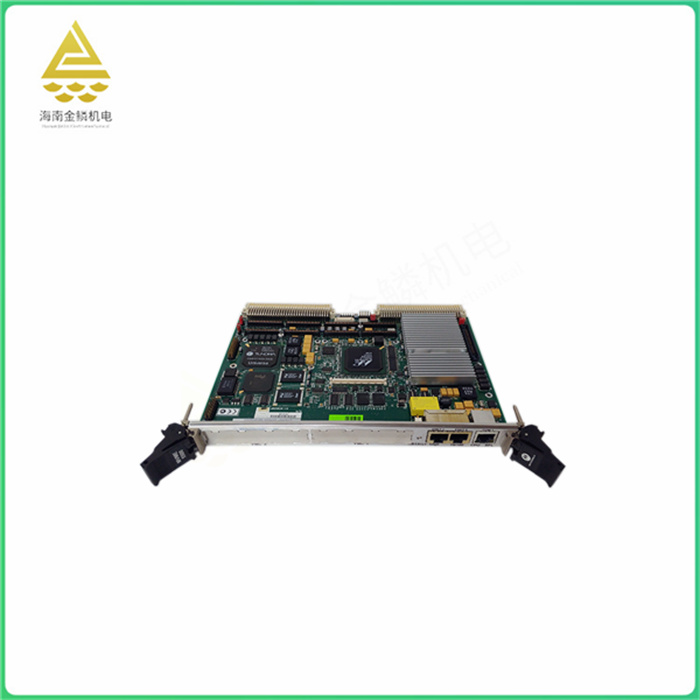
The MVME5500 has a variety of features, including:
High performance: It uses MOTOROLA's PowerPlus II architecture and is equipped with a variety of processor options, such as MPC7400, MPC7410, MPC750, etc., with powerful computing power and data processing capabilities.
High-speed data transfer: It supports high-speed data transfer and can achieve up to 64MB of memory read bandwidth and 64MB of memory write bandwidth.
A variety of peripherals and interfaces: The MVME5500 integrates a variety of peripherals and interfaces, such as serial communication interfaces, ADCs, Dacs, timers, real-time clocks, etc., to meet the needs of a variety of complex applications.
Scalability: It is designed so that it is easy to scale and can easily add other peripherals and interfaces to meet the needs of different applications.
Reliability: It has high reliability and stability, and can operate normally in a variety of harsh environments.
In short, the MVME5500 is a high-performance, high-speed data transmission, a variety of peripherals and interfaces, scalability and high reliability of the digital signal processing module, suitable for a variety of digital signal processing applications requiring high performance, reliability and flexibility.
The uses of MVME5500 mainly include the following aspects:
Industrial automation: The MVME5500 can be used to control and monitor production processes, equipment and machinery for automation and optimization.
Communication system: MVME5500 can be used for communication protocol conversion, data transmission control and other functions, and is applied to the control and data processing of communication networks.
Digital signal processing: The MVME5500 is suitable for digital signal controllers, digital communication systems and digital image processing and other application scenarios to perform digital signal processing tasks.
Data acquisition and processing: The MVME5500 can be used for data acquisition, analysis and processing, and is suitable for a variety of application scenarios requiring real-time data acquisition and processing.
Embedded computing platform: The MVME5500 can be used as an embedded computing platform, integrating processors, memory, input/output interfaces and expansion slots, etc., to provide computing and control capabilities for other devices or systems.
In summary, the MVME5500 is suitable for a variety of embedded computing and control applications that require high performance, reliability and flexibility.
The MVME5500 has a wide range of application scenarios, including but not limited to the following:
Industrial automation: In the field of industrial automation, the MVME5500 can be used to control and monitor production processes, equipment and machinery for automation and optimization.
Communication system: In the field of communication systems, MVME5500 can be used for communication protocol conversion, data transmission control and other functions, and is applied to the control and data processing of communication networks.
Digital signal processing: In the field of digital signal processing, the MVME5500 is suitable for digital signal controllers, digital communication systems and digital image processing and other application scenarios to perform digital signal processing tasks.
Data acquisition and processing: In the field of data acquisition and processing, the MVME5500 can be used for data acquisition, analysis and processing, suitable for a variety of application scenarios requiring real-time data acquisition and processing.
Embedded computing platform: The MVME5500 can be used as an embedded computing platform, integrating processors, memory, input/output interfaces and expansion slots, etc., to provide computing and control capabilities for other devices or systems.
Medical equipment: In the field of medical equipment, the MVME5500 can be used for medical image processing, medical equipment control, etc.
Test and measurement: In the field of test and measurement, the MVME5500 can be used in data acquisition, analysis and test systems, as well as laboratory and engineering applications.
Aerospace: In the aerospace sector, the MVME5500 can be used for flight control, navigation and data processing.
In summary, the MVME5500 is suitable for a variety of embedded computing and control applications that require high performance, reliability and flexibility.
The following are the general functions and features of the Motorola MVME5500:
1. Computing performance:
The MVME5500 has powerful computing performance and is usually equipped with a high-performance processor (such as PowerPC or x86 architecture), enabling it to perform complex computing tasks and real-time control operations.
2. Operating system support: It usually supports a variety of operating systems, such as VxWorks, Linux, etc., making it suitable for a variety of embedded applications.
3. A variety of input and output interfaces: MVME5500 provides a variety of input and output interfaces, including digital input and output, analog input/output, Ethernet interface, port, USB interface, etc., in order to connect and control a variety of external devices and sensors.
4. Extensibility: It is usually extensible, and additional functions or interfaces can be added through slots or expansion cards to meet the needs of specific applications.
5. Industrial grade design: The MVME5500 is usually designed to have industrial grade durability and be able to operate stably in an industrial environment for a long time. They are usually earthquake-resistant, dust-proof, moisture-proof and so on.
6. Remote monitoring and management: Some MVME5500 can be remotely monitored and managed through the network, allowing users to remotely access and control the embedded system.
7. Reliability and stability: These platforms are often designed to be reliable and stable to meet the requirements of real-time control and data acquisition applications.


